
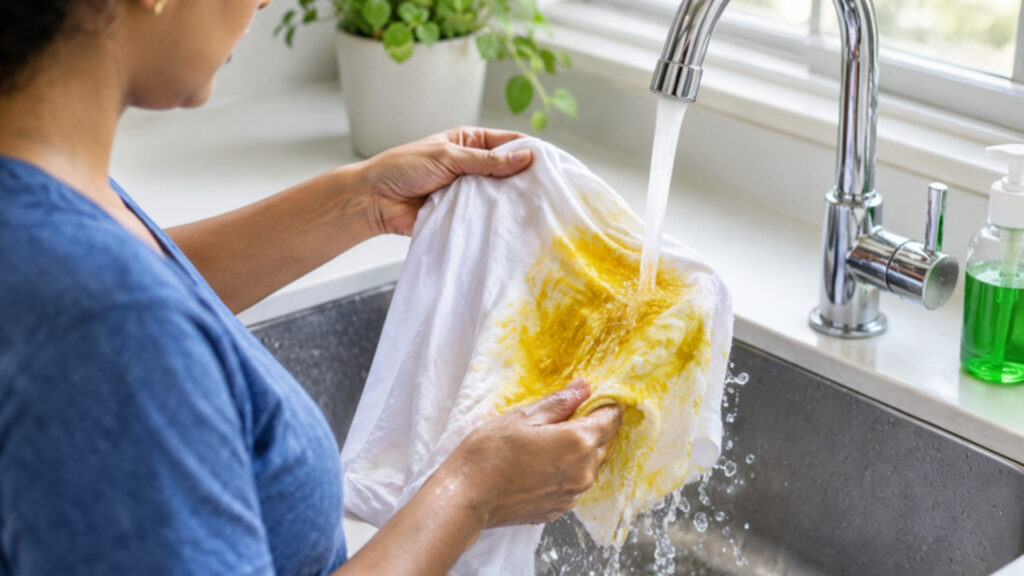
A white T-shirt goes with everything, including dal, chai and the haldi ceremony. The good news is that most stains come out if you treat them the right way, and fast. This guide covers the stains that actually happen, using things you already have at home.
Five rules that save most white tees
- Act fast. A fresh stain is far easier to lift than one that has dried overnight.
- Blot, don’t rub. Rubbing pushes the stain deeper into the cotton and spreads it.
- Start with cold water. Hot water sets stains that contain protein, like milk, sweat and blood.
- Work from the back. Rinse through the back of the fabric so the stain is pushed out, not further in.
- Check before you dry. Heat from an iron or a hot dryer sets a stain for good. If it’s still there after washing, treat it again before drying.
Haldi (turmeric) and curry stains
Turmeric is the stain everyone dreads, especially after a haldi ceremony. It’s very bright, but it has one weakness: sunlight fades it.
- Scrape off any paste or food with a spoon. Don’t wipe it.
- Rinse the stain from the back under cold running water.
- Dab on a little liquid dish soap, work it in gently with your fingers and leave it for 10 minutes.
- Rinse, then wash the tee as usual.
- Dry it in direct sunlight. Sunlight breaks down the yellow colour in turmeric, and a faint stain often disappears in an afternoon. Repeat for a day or two if needed.
For a stubborn mark, soak the tee for a few hours in oxygen bleach mixed as the pack says, then wash and sun-dry again.
Chai and coffee stains
Chai has milk in it, so treat it with cold water first. Hot water can set the milk.
- Rinse from the back with cold water.
- Rub in a little liquid detergent and leave it for 15 minutes.
- If a brown mark remains, soak the stain for 30 minutes in one part white vinegar to two parts water.
- Wash as usual.
Yellow sweat stains under the arms
Yellow underarm patches build up slowly from sweat and deodorant. They’re the reason most white tees get retired early, but they can usually be brought back.
- Mix two spoons of 3% hydrogen peroxide (sold at chemists), one spoon of baking soda and a few drops of dish soap into a paste.
- Spread it on the stain, scrub lightly with an old toothbrush and leave it for up to an hour.
- Rinse and wash as usual.
Use this on white cotton only, and test a hidden spot first. To stop the patches coming back, let deodorant dry before you dress, and wash sweaty tees soon rather than leaving them in the laundry basket for days.
Oil and grease: achaar, pakoras and samosas
- Blot off what you can with a tissue.
- Cover the spot with talcum powder, cornflour or baking soda and leave it for 15 minutes to soak up the oil.
- Brush the powder off, then work in liquid dish soap, which is made to break down grease.
- Wash in the warmest water the care label allows.
Ink stains
- Put a folded paper towel under the stain.
- Dab the stain from the back with rubbing alcohol or an alcohol-based hand sanitiser. The ink moves into the paper towel.
- Keep moving to a clean part of the towel and dab until no more ink comes out.
- Rinse and wash as usual.
Blood stains
Only ever use cold water on blood. Hot water cooks the protein into the fabric.
- Rinse from the back under cold running water.
- Soak for 30 minutes in cold water with a spoon of salt.
- For what’s left, dab on a little 3% hydrogen peroxide (white fabric only). It fizzes as it works.
- Rinse and wash in cold water.
Mud and grass stains
- Let mud dry completely, then brush off as much as you can.
- Rub liquid detergent into the stain and leave it for 15 minutes. A detergent with enzymes works best on grass.
- Wash as usual, and check the stain before drying.
Mehendi (henna) stains
Henna is made to stain, so speed matters more than anything else here.
- Scrape off the paste straight away.
- Rinse from the back with cold water.
- Work in liquid detergent, then soak for a few hours in oxygen bleach mixed as the pack says.
- Wash and dry in the sun.
A henna stain that has sat for days may fade but never fully lift.
Should you use chlorine bleach?
Usually not. Chlorine bleach can turn sweat stains more yellow, weakens cotton over time, and can damage a printed design. Oxygen bleach is the safer choice for white tees. It’s sold as a stain remover powder, and you mix it with water as the pack says. Test it on a hidden spot first.
How to keep a printed white tee looking new
- Wash it inside out, so the print doesn’t rub against other clothes.
- Use cool water and a mild detergent.
- Keep bleach away from the print. Treat stains around it carefully.
- Don’t iron on the print. Iron the tee inside out, or put a cloth over the design.
- Skip the hot dryer. Line-drying is kinder to both the cotton and the print.
When a tee is past saving
Some stains win. When yours does, the old tee makes a great dusting cloth, and a new one can be anything you like. Design your own in the Exprez Design Studio, or start from one of our ready-made designs and make it yours.
Questions people ask
Does sunlight really remove haldi stains?
Yes. The yellow colour in turmeric fades in sunlight. After washing, dry the white tee in direct sun, and a light haldi stain often disappears in an afternoon. A heavier one may need a second day.
Can I use bleach on a white printed T-shirt?
Avoid chlorine bleach. It can damage the print, weaken the cotton and turn sweat stains more yellow. Use an oxygen bleach stain remover instead, keep it off the print, and test a hidden spot first.
Why did my white T-shirt turn yellow?
Usually a slow build-up of sweat and deodorant, especially under the arms. Chlorine bleach can make it worse. A paste of hydrogen peroxide, baking soda and a little dish soap lifts most of it from white cotton.
Does hot water remove stains?
Not at first. Hot water sets stains that contain protein, like milk, sweat and blood. Start with cold water, and only use warm water for oil and grease once the stain has been treated.
How do I get an old, dried stain out of a white tee?
Soak the tee for several hours or overnight in oxygen bleach mixed as the pack says, then wash it and dry it in the sun. Old stains often need two or three rounds.